Digital Signage Display GOB Encapsulation & Safety Engineering
Stadium perimeter LED display protection – faces conditions no other screen encounters: footballs at 100 km/h, players sliding into the boards, rain, UV exposure, and the relentless demand of live broadcast cameras. This guide explains why GOB encapsulation and mechanical protection are not optional upgrades — they are the baseline for any venue that expects a perimeter system to survive a full season.
Most stadium digital signage display failures don’t begin in the control room. They begin at the module surface. A football struck at full power, a player sliding into the advertising boards, a sudden downpour during an evening match — these are the conditions that separate a display engineered for stadiums from a standard outdoor screen mounted behind a barrier. The difference is not pixel pitch. It is protection engineering.
As the stadium perimeter display supplier, this guide examines the two layers of protection that determine whether a stadium digital signage display survives a full season: the encapsulation technology that seals the LED module, and the mechanical design that absorbs impact before it reaches the electronics.
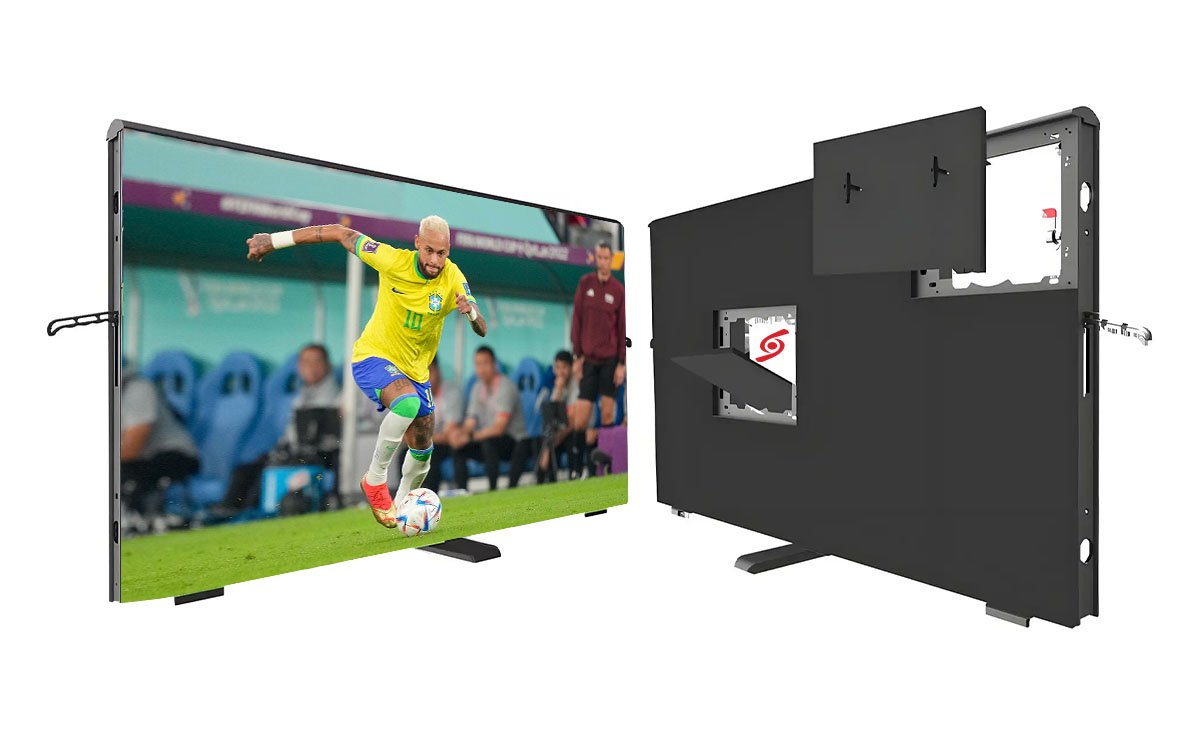
Why Standard SMD Fails at the Perimeter
A conventional SMD LED module exposes its lamp beads. Each bead sits on a solder joint, surrounded by air. This design works in controlled environments, but a perimeter display faces three simultaneous threats that SMD was never engineered to handle:
- Impact: Footballs, players, and equipment strike the boards repeatedly. An exposed bead can be dislodged by a single direct hit, creating a dead pixel that is visible to every camera in the stadium.
- Moisture: Rain, irrigation spray, and high humidity penetrate the gaps between beads. Once moisture reaches the solder joint, corrosion begins — often invisible until a section of the display fails during a live match.
- Cleaning and maintenance: An exposed SMD surface cannot be wiped aggressively without risk of dislodging beads. In a venue that hosts multiple events per week, this limits how quickly the display can be restored between matches.
The industry response has been to add protective layers. Some suppliers use a silicone mask over the lamp beads. Others add a rubber pad behind the cabinet. These measures help, but they treat the symptom rather than the root cause: the LED package itself remains exposed.
GOB Encapsulation: The Armored SMD Approach
GOB — Glue On Board — changes the equation by applying protection at the module level, not the cabinet level. After the SMD lamp beads are soldered to the PCB, a layer of transparent epoxy resin is poured across the entire module surface. The resin fills every gap between beads and the board, then cures into a continuous, seamless shield[citation:7].
The result is an SMD module with a surface that behaves like a single piece of armor. There are no exposed beads, no gaps for water to enter, and no solder joints for impact to reach directly. For stadium perimeter display maintenance guide, this changes the failure profile entirely.
Impact Resistance
GOB modules have demonstrated approximately 8× the impact resistance of unprotected SMD, with drop tests surviving 1.5-meter falls[citation:7]. For a perimeter display, this means a football strike that would dislodge an SMD bead simply transfers energy across the epoxy surface.
Moisture Sealing
The epoxy layer prevents water vapor from reaching the LED and PCB interface. In an outdoor venue, this eliminates the primary mechanism of corrosion-related dead pixels. GOB is specifically recommended for outdoor advertising screens and high-traffic areas where moisture and dust are unavoidable[citation:7].
Broadcast-Friendly Surface
The resin diffuses light output, softening the point-source appearance of individual pixels. This reduces moiré patterns when the display appears on television cameras — a critical advantage for perimeter boards that are almost always in the broadcast frame[citation:7].
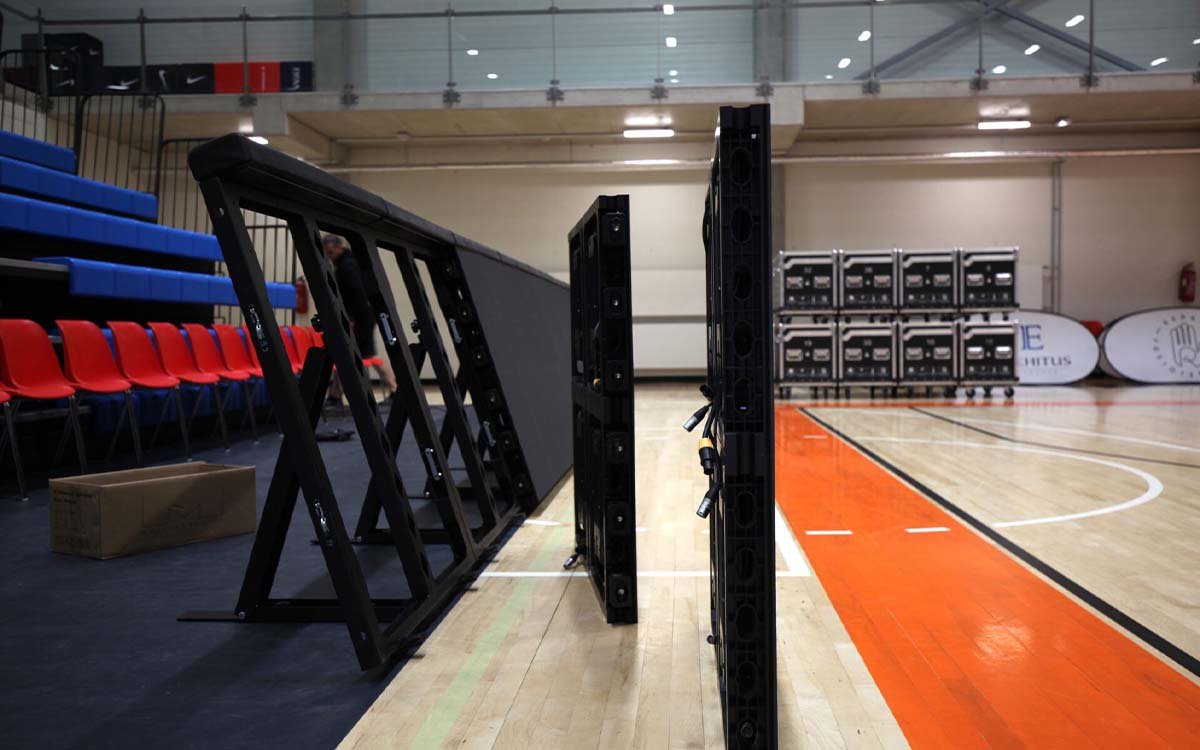
Beyond the Module: Mechanical Protection at the Cabinet Level
Encapsulation protects the LED package, but a perimeter display also needs mechanical engineering to absorb impact before it reaches the module. Professional stadium systems combine GOB modules with cabinet-level features:
- Soft face masks: A silicone or rubber layer over the module surface adds a first line of energy absorption. When a ball strikes, the mask compresses and spreads the load across a wider area before it reaches the GOB surface.
- Rear cushioning: Rubber pads between the cabinet and the mounting structure reduce shock transmission to the electronics and power supplies.
- Balanced base weights: Cabinets designed with low center-of-gravity bases resist tipping when struck at the top edge, protecting both the display and players who slide into the boards.
- Safety escape gates: Perimeter systems must include designated sections that open for player egress and emergency access. These gates integrate the same protection features while remaining functional[citation:14].
A GOB module without mechanical protection is like a sealed phone without a case — protected from dust and water, but still vulnerable to a direct impact. The two layers work together.
The Trade-Offs: When GOB Perimeter Displays Make Sense
GOB encapsulation adds cost compared to standard SMD — typically a 20% to 30% premium at the module level[citation:7]. For a stadium digital signage display system, this premium is almost always justified. But there are limitations worth understanding:
| Factor | GOB Perimeter Display | Standard SMD Perimeter |
|---|---|---|
| Impact survival | High (epoxy armored surface) | Low (exposed beads) |
| Moisture resistance | Sealed surface, no gaps | Requires silicone mask + careful sealing |
| Broadcast moiré | Reduced (diffused emission) | More visible point-source effect |
| Repair approach | Module-level replacement | Individual bead replacement possible |
| Unit cost | 20–30% premium | Lower initial cost |
The repair limitation is important to understand. Replacing a single dead lamp bead in a GOB LED module requires removing cured epoxy — a time-consuming process. In practice, GOB digital signage display systems are maintained through module-level replacement rather than component repair[citation:7]. For a stadium, this is usually acceptable: module swaps can be planned between events, while a screen full of dislodged SMD beads requires immediate intervention during the match window.
For a deeper comparison of perimeter versus center-hung configurations, see our guide on Stadium Perimeter LED Boards vs Center-Hung Scoreboards.
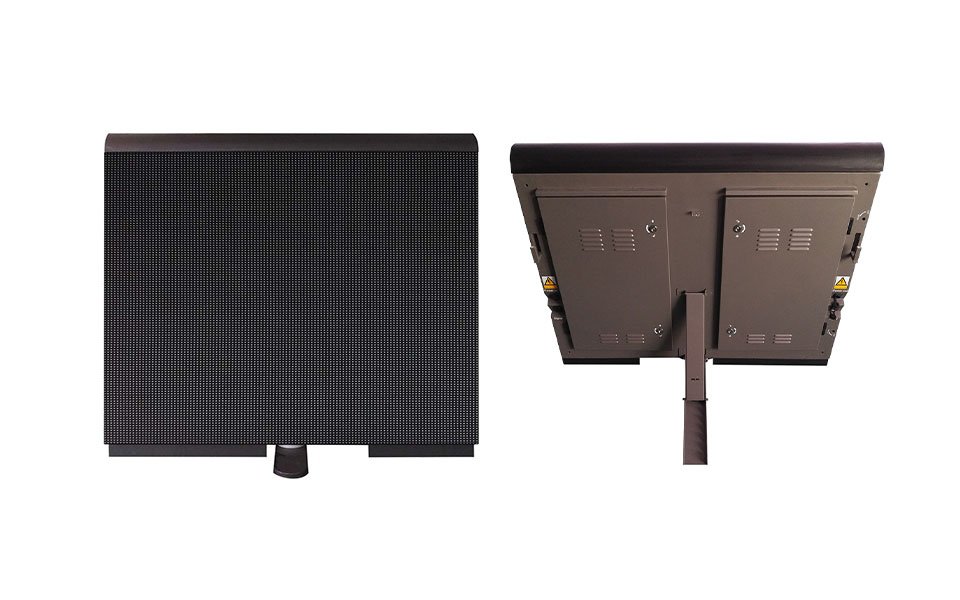
The Maintenance Reality: What GOB Changes in the Field
The value of GOB protection becomes clear over a full season. In a conventional SMD perimeter system, the maintenance team spends match days inspecting for dead pixels and replacing beads. In a GOB digital signage display system, the surface can be wiped clean with a soft cloth, and module-level issues are addressed between events rather than during the match window.
For venues that host televised matches, this reliability has a direct commercial impact. Broadcast exposure value increases by 30% to 50% when perimeter content remains visible and legible throughout the match[citation:2]. A single dead section during a goal celebration is a lost advertising impression.
For a structured approach to maintaining perimeter infrastructure, including the electrical and data systems that support the display, see our Stadium Perimeter Display Maintenance Guide.
Specifying GOB for Your Perimeter System
When evaluating a sports digital signage display supplier, the GOB specification should be verifiable, not assumed. Request the following:
- Epoxy material specification: The resin type, curing process, and light transmittance values. “GOB” alone is not a specification.
- Impact test data: Drop test height and impact energy results, ideally compared against the same module without encapsulation.
- Cabinet-level protection design: Face mask material, rear cushioning, and base weight distribution.
- Broadcast performance: Refresh rate (minimum 3840Hz for camera use) and moiré mitigation evidence.
- Maintenance protocol: Module swap time and spare module availability for in-season replacement.
A perimeter display is not a standard outdoor screen placed behind a barrier. It is a piece of match-day infrastructure that must survive impacts, weather, and broadcast scrutiny simultaneously. GOB encapsulation provides the module-level armor. Mechanical protection provides the cabinet-level resilience. Together, they define the baseline for a system that lasts more than a season.
Related Reading
- Stadium LED Display Power & Data Infrastructure: An Engineering Guide — the electrical and data backbone that supports the display.
- Stadium Perimeter Display Maintenance Guide — the 12-point annual checklist for long-term reliability.
- 5 Hidden Costs of a Cheap Stadium LED Display — why the lowest unit price rarely produces the lowest total cost.
- Stadium Perimeter LED Boards vs Center-Hung Scoreboards — which surface fits which venue type.
External references:
- Colorlight: LED Display Explained — SMD, COB, GOB — technical comparison of GOB encapsulation and impact test data.
- invidis: Sports Venue Analysis — Fans Would Pay for Enhanced Experiences — industry white paper data on display quality and broadcast exposure value.
- Digital Signage Today: 5 Mistakes Stadium Owners Make When Buying LED Perimeter Displays — procurement pitfalls including protection and reliability.
Protecting Your Perimeter Display Starts with the Right Specification
Send us your venue type, perimeter length, and broadcast requirements. We’ll recommend a GOB-protected perimeter configuration with cabinet-level impact protection and broadcast-compliant refresh rates.
Request a Perimeter Assessment