
Arena Display Systems Built for the Bowl
From center-hung scoreboards to court-side LED rings and broadcast-ready studio screens — we deliver the complete basketball arena LED display system as one turnkey package, engineered for indoor viewing distances and on-camera performance.
Four Arena Tiers, Four System Designs
A community gym and a broadcast-ready NBA arena do not need the same basketball arena LED display system. Here is how GobLED sports typically configure each tier of basketball venue.
Community Gym
Local gyms, school arenas, and community sports halls. A single court-side ring and an entry display — no center-hung cube LED display scoreboard required.
Regional Arena
Professional second-tier leagues and NCAA division venues. Full court-side ring, a center-hung scoreboard, and entry displays — a complete match-day system.
National Arena
NBA, EuroLeague, CBA, and international tournament venues. Broadcast-grade lightweight LED panels, full multi-face sync, and dedicated camera-facing surfaces for TV coverage.
Training Facility & Academy
Club training centres and youth academies. Focus on player-facing data displays and a central data hub — often multi-court layouts with shared operations.
Three Positions, Three Different Roles
GobLED sports basketball arena LED display system is simpler than a football stadium’s — but each of the three positions plays a distinct role. Here is what we place at each one.
Center-Hung Scoreboard
The suspended multi-sided scoreboard at the arena’s center. Provides score, clock, replay, and statistics to every seat — the visual heart of the match-day experience.
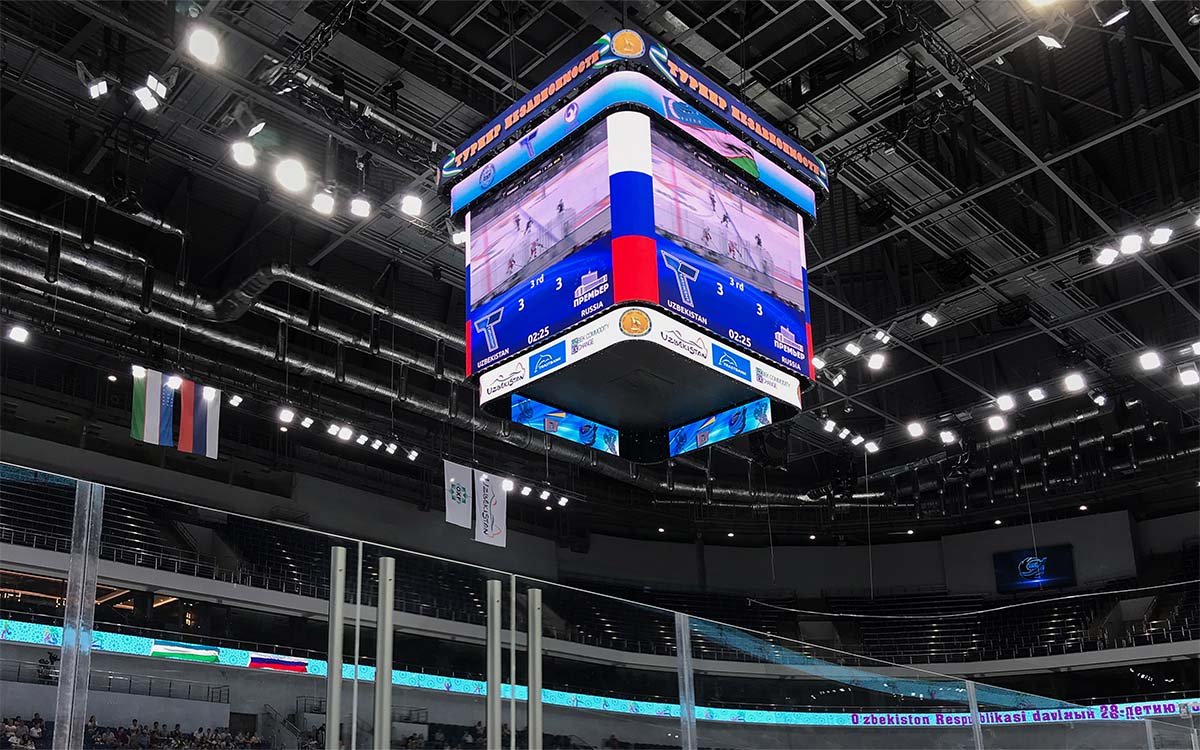 Center-Hung
01
Court-Side LED Ring
The continuous LED band running around the court edge. Primary sponsor exposure surface at close range — visible to courtside seats, cameras, and the lower bowl.
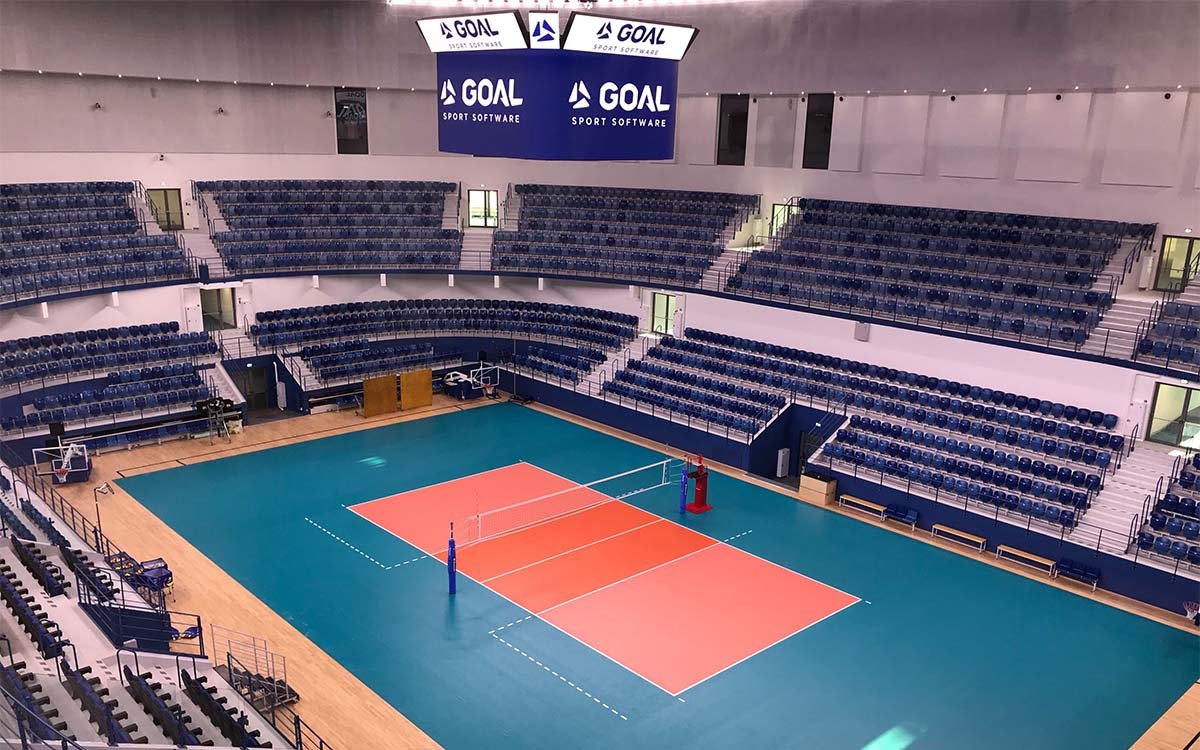 Court-Side Ring
02
Entry & Concourse
Entry gates and concourse displays for wayfinding, ticket information, and pre-match sponsor content — the first and last screen fans see at every arena.
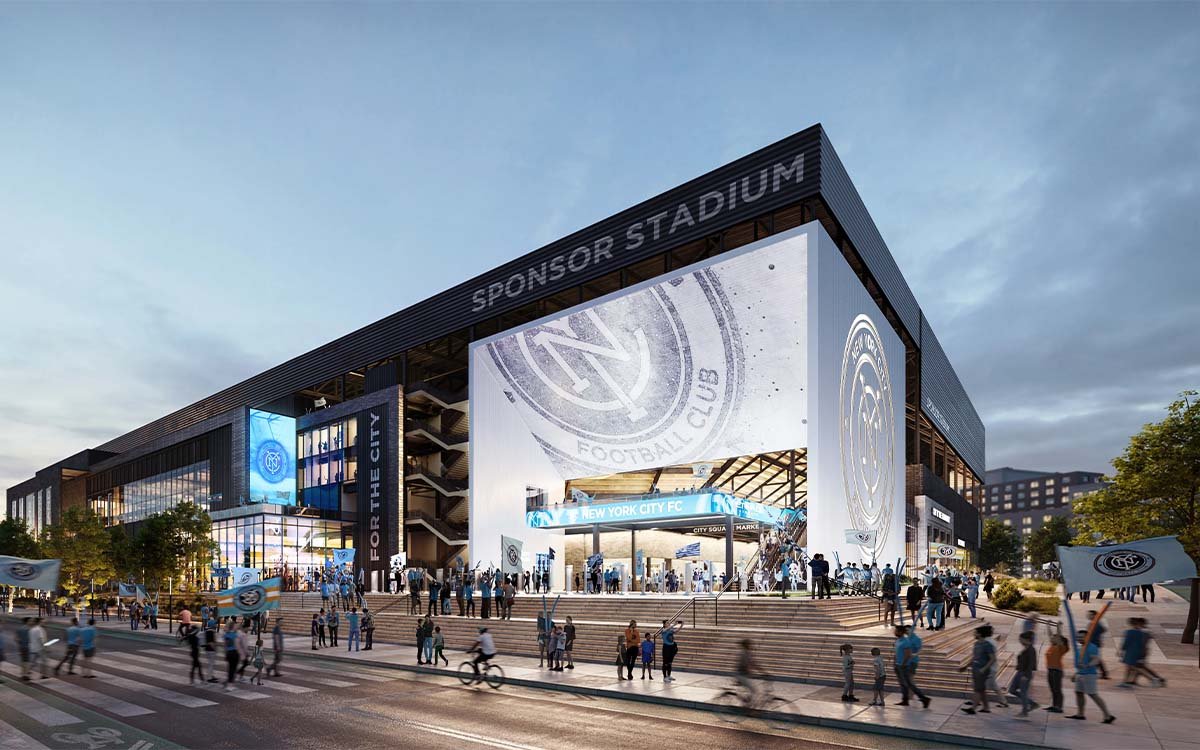 Entry · Concourse
03
One Match Day, Ten Screens States
The basketball game moves faster than a football match — four quarters, frequent timeouts, and 24-second shot clocks. The basketball arena LED display system runs on a tighter script. Here is how a typical basketball match day sequences.

A Regional Arena in 9 Weeks
A complete indoor basketball LED display project system delivered to a regional league arena — full court-side LED ring, 4-sided center-hung scoreboard, and entry displays, all running on one unified control platform.
-
01 / SURVEYArena Survey & System Design Court dimensions, ceiling structure, and broadcast positions measured. Full system layout confirmed.Wk 1–2
-
02 / DESIGNDetailed Engineering Center-hung rigging design, court-side ring layout, and control architecture documented.Wk 2–3
-
03 / BUILDProduction & Pre-Test P2.9 court-side modules, P3.8 center-hung faces, and entry displays produced and pre-calibrated.Wk 3–6
-
04 / INSTALLInstallation & Sync Center-hung lifted and rigged, court-side ring assembled, entry displays mounted, all screens synced.Wk 6–8
-
05 / LIVEContent Setup & First Game Match-day content script configured, operators trained, system live from the first home game.Wk 8–9
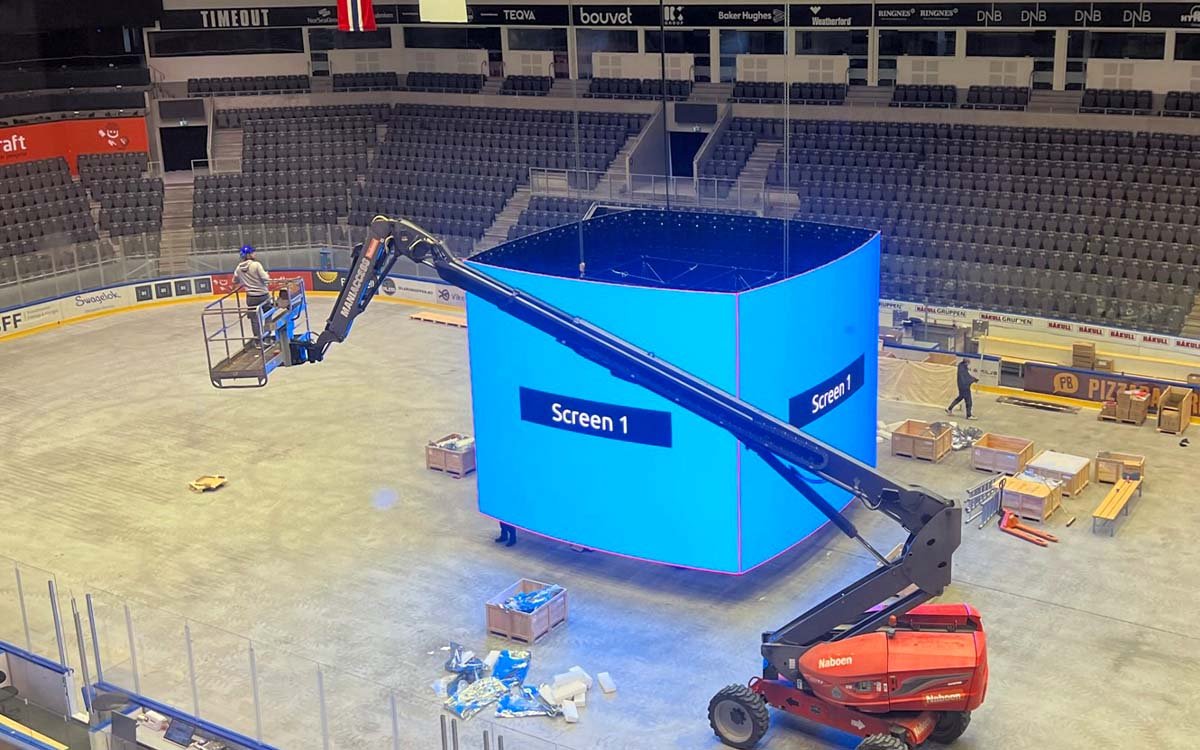 Center-Hung Install
AS-22
Turnkey Arena System · 2025 Q2
The center-hung was the critical piece — the ceiling rigging had to fit our existing structural points, and the whole unit had to be lifted in a single night window. The basketball arena LED display system went up cleanly, and by the first game everything was running. The 24-second clock sync with the court-side ring is the detail fans notice most.
One Contract · Five Stages
GobLED sports basketball arena LED display project moves quickly — indoor construction is not weather-dependent, and the whole system typically ships as pre-assembled units. Every stage is scheduled against your game calendar, and the complete basketball arena LED display system goes live at your first home fixture.
- Court dimensions
- Ceiling structure & rigging points
- Broadcast positions
- Center-hung rigging design
- Court-side ring layout
- Power & control topology
- Court-side modules
- Center-hung faces
- Pre-shipment QC
- Center-hung lifting & rigging
- Court-side ring assembly
- Multi-face sync verification
- Match-day script setup
- Operator training
- First home game live
- Arena survey & system design
- Center-hung rigging engineering
- Court-side & center-hung production
- International freight & customs
- On-site rigging, assembly & sync
- Match-day script setup & training
- Off-season access window
- Ceiling rigging point verification
- Grid power & timing system access
- Import duties & local taxes
Questions Before You Commit
The four questions basketball arena operators ask us most often — rigging safety, clock synchronization, match-day pace, and multi-sport flexibility.
- Structural rigging design stamped by a licensed engineer, matched to your specific ceiling structure
- Four or eight independent load points, each with its own load cell and secondary safety wire
- Pre-lift load test on-site before the cube is raised to its final position
- Secondary EN 795 fall-arrest wire as an independent backup to the primary rigging
- Sub-10ms sync latency across the center-hung faces, court-side rings, and any auxiliary screens
- Direct feed from the timing system — no re-processing, no delay between the referee’s whistle and the on-screen update
- Frame-locked updates — every screen updates in the same frame, not cascading milliseconds apart
- Broadcast timecode alignment — when your game is televised, the on-screen clock matches the broadcast graphic clock
- Event-driven content — timeout graphics, foul alerts, and substitution prompts fire automatically the moment the timing desk triggers them
- Pre-loaded sponsor inventory — the content platform holds the entire game’s sponsor schedule, so no manual loading happens mid-game
- Instant content switching — between game states (live play → timeout → sponsor break → live play) with no visible transition
- Match-phase scripting — Q1, Q2, halftime, Q3, Q4 all have their own content profiles, triggered by game events, not by operator input
- Multiple sport profiles — basketball, volleyball, handball, futsal, and esports each have their own content layout and data feed configuration
- Non-sport modes — concerts, corporate events, and ceremonies use the same screens with a different content profile
- Reconfigurable screen roles — during volleyball, the center-hung cube LED display can show net-side statistics; during a concert, it becomes an ambient visual backdrop
- Pre-built event templates — one-touch switching between event types, with no re-programming required
Get a Real Arena System Plan
Send us your court dimensions, seat count, and league calendar. Our engineers will respond with a complete arena display system plan — center-hung scoreboard, court-side rings, entry displays, and match-day content script, all scoped to your arena.
Request an Arena Assessment